
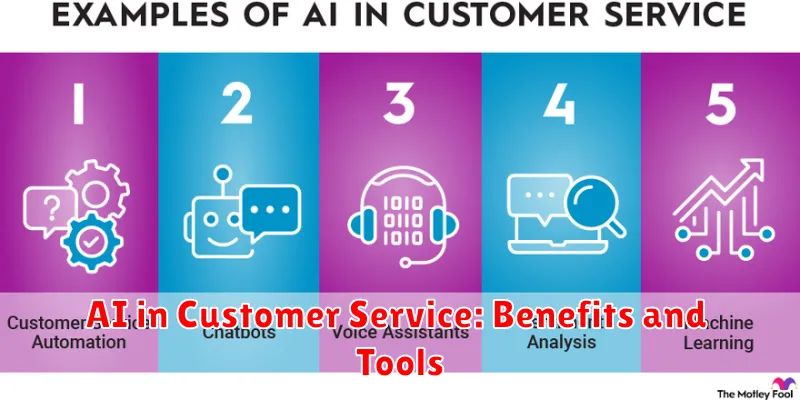
In today’s rapidly evolving digital landscape, businesses are constantly seeking innovative ways to enhance customer experience. Artificial intelligence (AI) is emerging as a transformative force in customer service, offering a multitude of benefits, from increased efficiency and reduced costs to personalized interactions and 24/7 availability. This article explores the significant advantages of incorporating AI into customer service strategies and examines the various tools available to businesses looking to implement these cutting-edge solutions. Understanding the potential of AI in customer service is crucial for staying competitive and meeting the ever-increasing demands of today’s consumers.
From AI-powered chatbots providing instant support to sophisticated analytics platforms offering valuable insights into customer behavior, the applications of AI in customer service are vast and diverse. By automating routine tasks, AI frees up human agents to focus on more complex issues, ultimately leading to improved customer satisfaction and loyalty. This article will delve into the specific benefits of using AI in customer service, highlighting its potential to revolutionize the way businesses interact with their customers and providing a comprehensive overview of the essential tools driving this transformation.
What Is AI Customer Support?
AI customer support uses artificial intelligence to automate and enhance various customer service operations. It leverages technologies like machine learning and natural language processing to provide efficient and effective support interactions.
Instead of relying solely on human agents, AI-powered systems can handle a range of tasks, from answering frequently asked questions to resolving simple issues. This allows human agents to focus on more complex or sensitive customer interactions.
Key features of AI customer support often include chatbots, virtual assistants, and automated email responses. These tools can provide 24/7 support, personalize the customer experience, and significantly reduce wait times.
Chatbots vs Virtual Assistants
While both chatbots and virtual assistants utilize artificial intelligence, they serve distinct purposes and possess varying capabilities. Understanding these differences is crucial for effective implementation in customer service.
Chatbots are primarily designed for handling specific, pre-defined tasks. They excel at answering frequently asked questions, guiding users through simple processes, and providing initial customer support. Think of them as conversational interfaces focused on a particular domain or set of tasks.
Virtual assistants, on the other hand, offer a broader range of functionality. They are designed to handle more complex tasks, often integrating with various systems and applications. Virtual assistants can manage schedules, perform research, make reservations, and even control smart home devices. Their scope extends beyond simple question-and-answer interactions.
A key distinction lies in the level of personalization. Chatbots typically rely on pre-programmed responses, while virtual assistants can learn user preferences and adapt their responses over time, offering a more personalized experience.
Enhancing User Experience
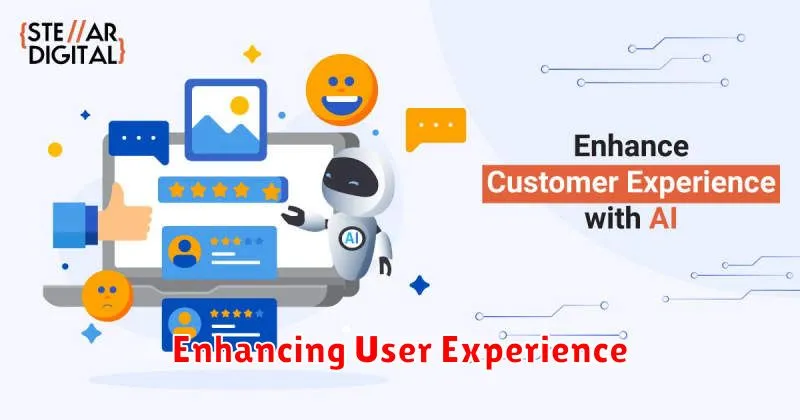
Artificial intelligence plays a crucial role in elevating the customer experience. By automating routine tasks, AI-powered tools free up human agents to focus on more complex and nuanced customer interactions. This leads to faster resolution times and increased customer satisfaction.
Personalization is another key benefit. AI algorithms can analyze customer data to understand individual preferences and tailor interactions accordingly. This can include personalized recommendations, proactive support, and customized communication styles. The result is a more engaging and satisfying customer journey.
AI-powered chatbots contribute significantly to a seamless user experience by providing 24/7 availability and instant support. They can handle a wide range of inquiries, from basic FAQs to more complex troubleshooting, ensuring customers receive prompt assistance whenever needed. This consistent accessibility contributes to a positive perception of the brand and fosters customer loyalty.
Analyzing Customer Behavior
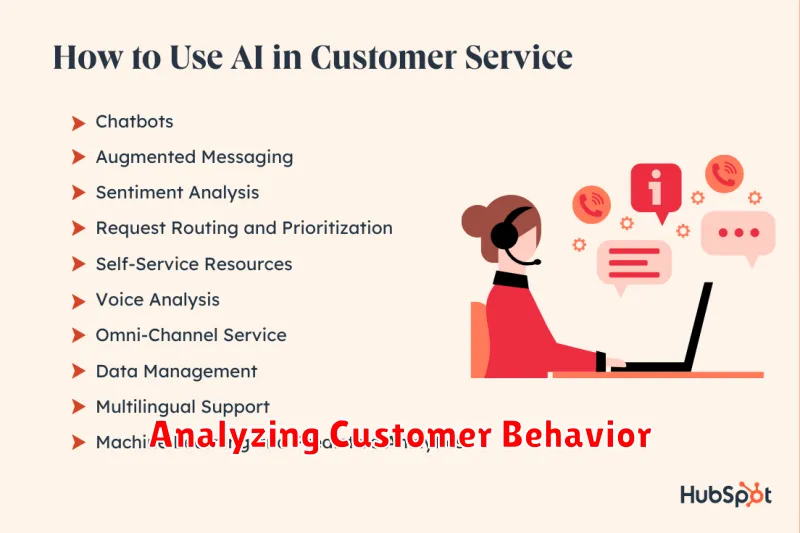
Artificial intelligence plays a crucial role in analyzing customer behavior, providing valuable insights for businesses. AI-powered tools can process vast amounts of data from various sources, including customer interactions, purchase history, and online activity.
This analysis can identify patterns and trends in customer behavior, allowing businesses to understand customer preferences, predict future actions, and personalize interactions. For example, AI can segment customers based on their purchasing habits, allowing for targeted marketing campaigns. It can also predict which customers are likely to churn, enabling proactive retention strategies.
Furthermore, AI can analyze customer feedback from surveys and social media to gauge customer sentiment and identify areas for improvement. This real-time analysis enables businesses to respond quickly to customer issues and enhance the overall customer experience.
Cost Reduction Through Automation
One of the most significant advantages of integrating AI into customer service is the potential for substantial cost reduction. Automating routine tasks, such as answering frequently asked questions and directing inquiries, frees up human agents to handle more complex issues.
This automation translates to reduced labor costs, as fewer agents are required to manage a high volume of customer interactions. Additionally, AI-powered chatbots and virtual assistants can operate 24/7, offering continuous support without incurring overtime expenses.
Improved efficiency further contributes to cost savings. Automated systems can handle inquiries rapidly and accurately, reducing the average handling time for each customer interaction. This efficiency gain minimizes the need for extensive customer service teams and associated infrastructure costs.
Future of AI in Customer Service
The future of AI in customer service is poised for significant advancements. AI’s role will expand beyond current applications like chatbots and move towards more sophisticated interactions.
Predictive analysis will become increasingly crucial, allowing businesses to anticipate customer needs and proactively offer solutions. This will lead to more personalized and proactive customer experiences.
Hyper-personalization, driven by AI, will enable businesses to tailor interactions based on individual customer preferences and past behavior. This could manifest in customized offers, targeted support, and more relevant communication.
Emotional AI is an emerging area with the potential to detect and respond to customer emotions in real-time. This technology could significantly improve customer satisfaction by enabling more empathetic and human-like interactions.
The integration of AI with Augmented Reality (AR) and Virtual Reality (VR) could revolutionize customer support by providing immersive and interactive experiences for troubleshooting and product demonstrations.
