

The mobile app landscape is constantly evolving, and staying ahead of the curve is crucial for developers, businesses, and users alike. In 2025, we anticipate a surge of groundbreaking advancements that will redefine how we interact with technology. This article, “Exploring Mobile App Trends in 2025,” delves into the key trends shaping the future of mobile applications, examining the forces driving innovation and the impact these changes will have on various industries. We will explore emerging technologies like augmented reality (AR), virtual reality (VR), artificial intelligence (AI), the Internet of Things (IoT), and blockchain, and analyze how they are converging to create immersive and personalized mobile experiences.
From the rise of super apps and the increasing importance of app security to the growing demand for cross-platform development and the continued evolution of mobile commerce, this exploration will provide valuable insights into the dynamic world of mobile app development. Understanding these mobile app trends is essential for navigating the digital landscape of 2025 and beyond. Whether you are a seasoned developer, a business leader, or simply a curious user, this article will equip you with the knowledge to anticipate and adapt to the exciting future of mobile technology. Prepare to discover the transformative power of mobile apps in 2025.
What’s Driving Mobile Innovation?
Several key factors are fueling rapid mobile innovation as we approach 2025. The increasing power of mobile devices, including enhanced processors and larger memory capacities, allows for more complex and sophisticated applications. This directly impacts the user experience, enabling richer graphics, faster processing, and more robust functionality.
5G connectivity is another critical driver. The increased speed and lower latency of 5G networks unlock opportunities for real-time interactions and data-intensive applications, like immersive augmented reality experiences and seamless cloud gaming.
Furthermore, the demand for personalized experiences is pushing innovation. Users expect apps tailored to their individual needs and preferences. This is driving advancements in artificial intelligence (AI) and machine learning (ML), enabling apps to learn user behavior and offer customized content and functionality.
Finally, the growing focus on user privacy and security is shaping mobile innovation. Developers are increasingly prioritizing secure coding practices and implementing robust data encryption measures to protect user information and build trust.
Rise of AI-Powered Apps
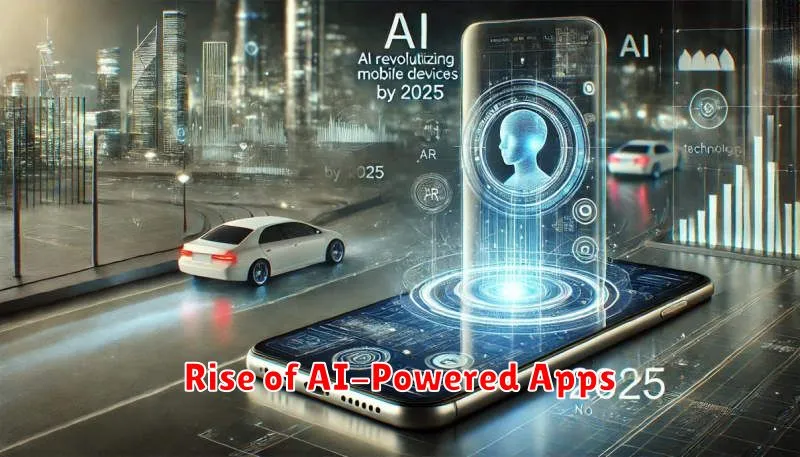
Artificial intelligence is rapidly transforming the mobile app landscape. By 2025, the integration of AI will be less of a novelty and more of a necessity for app developers seeking to deliver truly engaging and personalized user experiences.
Expect to see an increase in AI-driven personalization. Apps will leverage user data and machine learning algorithms to curate content, predict user behavior, and offer customized recommendations. This will lead to more intuitive and relevant app experiences, fostering greater user engagement and satisfaction.
AI-powered automation will also play a significant role. From chatbots handling customer service inquiries to algorithms optimizing app performance and identifying bugs, AI will streamline various aspects of app development and usage, increasing efficiency and reducing operational costs.
Furthermore, advancements in on-device AI processing will empower apps to perform complex tasks without relying on constant cloud connectivity. This shift will enable faster processing, improved privacy, and enhanced offline functionality, opening new doors for innovative app features.
5G and Real-Time Experiences
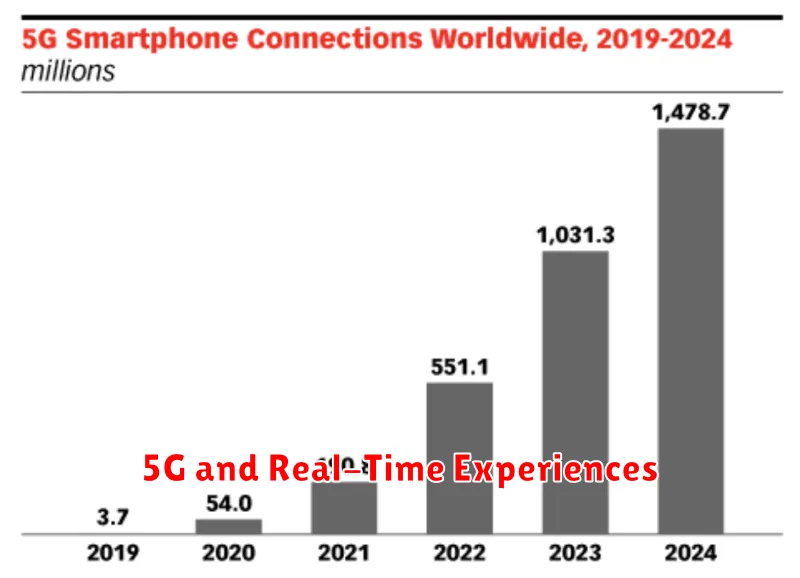
By 2025, 5G is expected to be a dominant force in mobile technology, enabling a new wave of real-time applications. The low latency and high bandwidth of 5G networks will unlock experiences previously impossible with older network generations.
One key area is immersive entertainment. Think real-time, multiplayer augmented reality games with minimal lag, or seamless streaming of high-fidelity virtual reality experiences. The enhanced connectivity will also revolutionize areas like live video streaming and video conferencing, with significantly improved quality and responsiveness.
Beyond entertainment, 5G’s impact will be felt in fields like remote surgery and autonomous vehicles, where real-time data transmission is critical. The ability to process and react to information instantly will be transformative for these industries.
Designing for Foldable Devices
By 2025, foldable devices are expected to be a significant segment of the mobile market. This presents unique challenges and opportunities for app developers. Designing for foldable devices requires a flexible approach to UI/UX. Apps must be able to seamlessly transition between different screen sizes and aspect ratios.
Adaptive layouts are critical. Content should reflow and resize smoothly as the device unfolds or folds. Developers need to consider different orientations and screen sizes, ensuring a consistent user experience across all modes. Multi-tasking is another key consideration. Foldable devices offer larger screen real estate, enabling users to run multiple apps simultaneously. Apps should be optimized to take advantage of this functionality.
Continuity is also crucial. The transition from a folded to an unfolded state should be seamless, maintaining the user’s context and progress. This requires careful consideration of how information is displayed and interacted with across different screen configurations.
Cross-Platform Development
In 2025, cross-platform development continues to be a dominant force in mobile app creation. This approach offers significant advantages, including reduced development time and cost savings by allowing developers to write code once and deploy it across multiple platforms (iOS, Android, etc.).
Key frameworks like Flutter and React Native are expected to maintain their popularity. Their robust ecosystems and active communities provide developers with ample resources and support. These frameworks continue to mature, offering improved performance and enhanced UI/UX capabilities, further solidifying their position in the market.
However, considerations regarding platform-specific nuances and potential performance limitations remain relevant. Developers must carefully evaluate the trade-offs between cross-platform efficiency and native performance when choosing a development strategy.
Minimalist UI and UX Trends
In 2025, minimalist UI and UX design continues to be a dominant trend in mobile applications. This approach prioritizes simplicity and efficiency, removing unnecessary elements and focusing on core functionalities. Users are increasingly drawn to apps that offer seamless, intuitive experiences without overwhelming visual clutter.
Key characteristics of minimalist design include ample white space, clear typography, and a limited color palette. These elements contribute to a visually appealing and easy-to-navigate interface.
Microinteractions play a significant role in minimalist UX, providing subtle feedback and enhancing user engagement without disrupting the overall streamlined experience. Streamlined navigation and easily accessible information architecture contribute to improved user satisfaction and task completion rates.
